
- What to Do With Pumpkins After Halloween: 5 Safe Options - October 23, 2026
- How Cold Can Broccoli Tolerate? 5 Temperatures to Protect It - October 22, 2026
- When to Stop Mowing Lawn in Fall: The Simple 50F Rule - October 21, 2026
The short answer
Compost an undecorated pumpkin, at home or at a community drop off, or give it to a farm that has agreed to take it. Don’t leave it out for wildlife: Colorado Parks and Wildlife says “Under Colorado law, feeding wildlife is illegal,” and the Illinois Department of Natural Resources doesn’t recommend it either.
Readers also askHow long will an uncarved pumpkin last?
At a glance Compost it Drop it off Farms Seeds Keep one What not to do Common questions
What to do with pumpkins after Halloween, at a glance
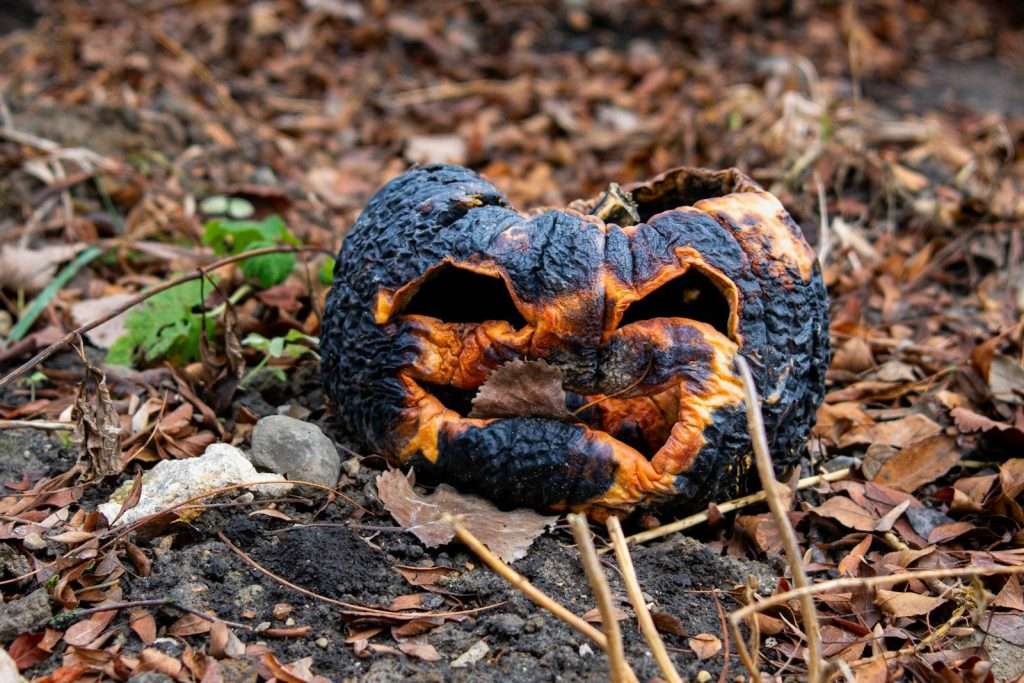
What to do with pumpkins after Halloween depends less on whether they’re carved than on whether they’re decorated. The Minnesota Pollution Control Agency says a pumpkin can’t be composted while it still has decorations on it, and wants it free of glue, stickers, lights, candles, glitter, paint and wax before it’s composted or donated.
| Your pumpkin | Compost | Give to a farm | Keep for display | Trash |
|---|---|---|---|---|
| Uncarved, firm, undecorated | Yes | Yes, if the farm has agreed | Yes, somewhere cool and dry | No need |
| Carved | Yes, once the candle and any wax are out | Ask first | No, a cut pumpkin won’t keep | No need |
| Painted, glittered or waxed | Only if every bit comes off | No | Yes, if it’s uncarved | Yes, if the decorations won’t come off |
| Soft, moldy or collapsing | Yes | No | No | No need |
The farm column is partly our judgment, since none of our sources says whether farms take carved or moldy pumpkins. Oregon State University says to use damaged pumpkins promptly, and carving counts as damage.
Compost it at home
An undecorated pumpkin composts well once it’s broken into pieces and any wax, paint or glitter is removed. The Minnesota agency calls composting the best way to manage Halloween pumpkins, and a backyard bin works. That beats the landfill, where the University of Illinois says pumpkins don’t break down and release greenhouse gases instead.
Composting pumpkins goes faster if you smash them first, Illinois says. A horticulturist at Texas A&M University suggests letting the pumpkin dry so the rind breaks into small pieces. We’d take a spade to it rather than drop it on whole.
Take it to a drop off site or pumpkin smash
Many communities run pumpkin drop off sites or pumpkin smash events after Halloween that compost the pumpkins for you. Colorado Parks and Wildlife points to drop off sites in Denver, Durango and other cities, and Illinois describes smash events run with a local waste hauler. The Minnesota agency adds that yard waste sites, which typically don’t take food waste, make an exception for pumpkins.
The same rule applies as at home: every decoration comes off first, or the pumpkin can’t be composted. Your city or county’s solid waste pages will say what’s running near you, and not every community has curbside collection for food scraps.
Give it to a farm
Some farms take pumpkins to feed their livestock, but only some, so call ahead. The Minnesota agency says several farms in the state accept Halloween pumpkins as feed, and Colorado says it’s common for ranchers and farmers to take them for livestock or compost.
Ask what they’ll accept before you load the car. A pumpkin meant for animals needs to be clean of everything that would stop it being composted: no paint, wax, glitter, stickers or candles.
Save the seeds
Seeds from a store or patch pumpkin often won’t grow true, because pumpkins cross pollinate. The University of Illinois explains that they cross with other members of the squash family, so your seed may be a cross between your pumpkin and whatever grew nearby. Commercial growers keep crops at least half a mile (800m) apart to get true seed.
That doesn’t make saving pumpkin seeds pointless, just a gamble. Plant a few for fun, and buy seed for the patch you’re counting on.
Keep an uncarved one for Thanksgiving
An uncarved pumpkin stored cool and dry can last until late November and beyond. So how long do pumpkins last once they come indoors? Oregon State University says cured pumpkins kept at 50 to 55F (10 to 13C) last about 2 to 3 months, and not to let them get colder than 50F (10C).
That means bringing a porch pumpkin in once nights turn cold, to a garage shelf or a cool room, off the floor and not stacked. Leave the stem on, Oregon State says, because pumpkins without stems won’t store well, and keep it away from apples and pears, whose gas speeds spoilage. One that has sat outside since early October has already used some of its time, so check it for soft spots every week.
What not to do with an old pumpkin
Don’t leave pumpkins out for wildlife, and don’t eat a carved pumpkin that has sat out. Colorado Parks and Wildlife puts the first point plainly: “Under Colorado law, feeding wildlife is illegal because it risks wildlife health and safety.” Those in violation are subject to fines. Feeding draws deer into neighborhoods and mountain lions after them, and bears go for pumpkins as they pile on calories before denning season.
The Illinois Department of Natural Resources doesn’t recommend feeding pumpkins to wildlife either, because it can lead to damage complaints and spread disease, including chronic wasting disease in deer. Rules differ by state, so check yours. If you want to share, a wildlife specialist at Texas A&M says it’s probably best to share with birds only, using plain seeds. We’d skip even that in bear country, where Colorado warns that uncleaned bird feeders draw bears too.
Don’t dump it at the edge of the woods, either. Illinois says leaving pumpkins in forest preserves or ditches counts as littering and can be illegal.
As for eating it, Barbara Brown, a food safety specialist at Oklahoma State University, says the meat of a carved pumpkin isn’t safe to eat after it has been left at room temperature for several hours or days. Odessa Keenan, who coordinates a healthy cooking program at Texas A&M, sets the limit shorter: once the pulp has been out more than a couple of hours, assume it’s not good to eat.
What we would skip
Bleach to make a jack o lantern last. Texas A&M advises against it because wildlife may eat the pumpkin, and Illinois says not to give farm animals gourds washed with bleach, since it’s toxic. Texas A&M suggests 10 parts water to 1 part vinegar instead, though Illinois notes vinegar won’t help once mold has started.
Leaving it out “for the deer”. It feels generous. It’s illegal in Colorado, and it draws in more than deer.
Common questions
How do you dry pumpkin seeds for planting?
Rinse them, spread them out and let them air dry, never with heat: Texas A&M says drying them in the oven or the sun will kill them. Experts disagree on how long. Texas A&M says about 24 hours on paper towels and Illinois about a month, so we’d lean long. Experts give varying ranges for how long dry seed keeps, from three to five years to at least five, so we’d plant within three. Our guide to harvesting and cleaning pumpkin seeds covers getting them out.
Can you leave a pumpkin to rot in your garden bed?
You can, but a whole pumpkin breaks down slowly, and left in the open it can draw deer and, in bear country, bears. We’d break it into small pieces and add it to the compost pile instead. Our guide covers keeping compost going in winter.
Will pumpkin seeds sprout in your compost?
Some may. The Texas A&M horticulturist says to break the seeds down as well as the rind, otherwise some may germinate in your compost pile. We’d scoop the seeds out first, or pull any seedlings when they come up in spring.
What can you do with old gourds?
We’d treat soft or rotting gourds like pumpkins: into the compost, as long as they’re free of paint and wax. One that’s still hard may be worth keeping, and our guide covers what to do with gourds.
The deer will manage without it. The compost pile has been waiting all year.
The Evergreen Seeds letter
Placeholder. Hidden until launch.
No form is wired up yet. This block does not render.
Checked against: Colorado Parks and Wildlife, “Trash or compost pumpkins: Feeding wildlife puts humans and animals at risk”. University of Illinois, “How to safely dispose of old pumpkins after Halloween”. University of Illinois, “Saving Pumpkin Seeds?”. Oklahoma State University, “Safely decorating with pumpkins”. Texas A&M AgriLife, “Creative ways to use pumpkins this fall”. Texas A&M AgriLife, “Creative uses for pumpkins beyond Halloween”. Minnesota Pollution Control Agency, “Feed your pumpkin to livestock to keep it out of the landfill”. Oregon State University, “Plan now to harvest and store pumpkins and winter squash”.